
Keep compartments intact
Penetrations are a common weak spot. Proper seals help prevent fire, smoke and hot gases from spreading to adjacent compartments.
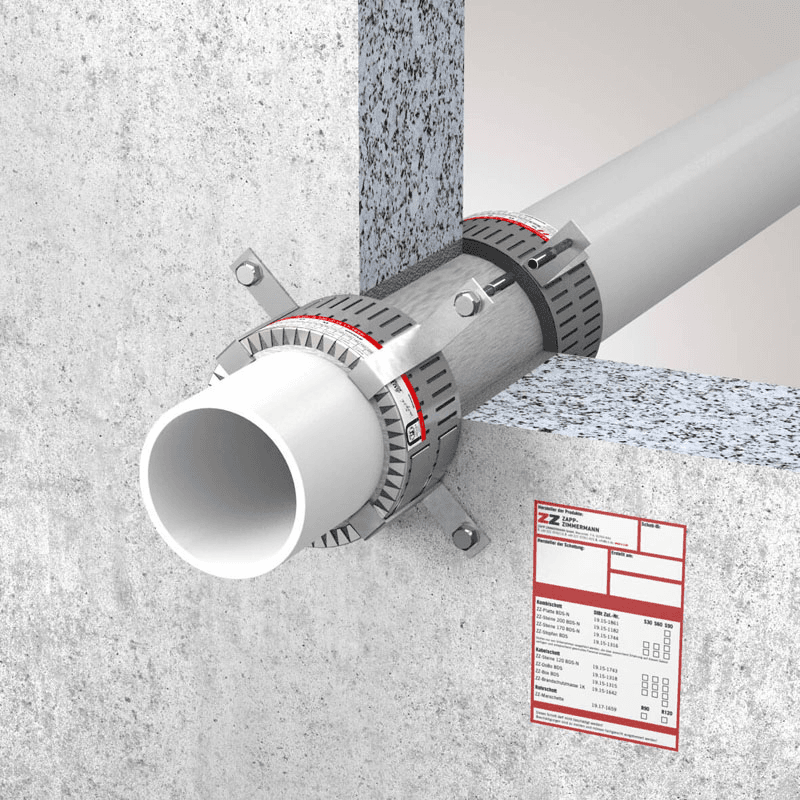
A pipe penetration seal is a fire protection measure for penetrations. It restores the required fire resistance of a wall or floor in the penetration area – commonly required in industrial and commercial buildings in Aachen.
Depending on pipe material (e.g., steel/copper vs. plastics), insulation, wall/floor type and the required fire rating, different tested systems are used.
Key principle: system-based execution, not improvisation. The selected system must match the actual installation conditions (Aachen, Würselen, Herzogenrath and nearby).
Example image – typical pipe penetrations in walls/floors (Aachen region).
Penetrations are a common weak spot. Proper seals help prevent fire, smoke and hot gases from spreading to adjacent compartments.
Combustible pipes may soften or melt under fire exposure. Intumescent components are designed to close the opening when the pipe fails.
Labeling and evidence (photos, system documentation) are often essential for handover, inspections and facility operation.
The right solution depends on more than the pipe itself: substrate, opening size, insulation, position and combinations also matter. For projects in Aachen and surrounding areas, we select and execute system-compliant solutions based on the real installation conditions.
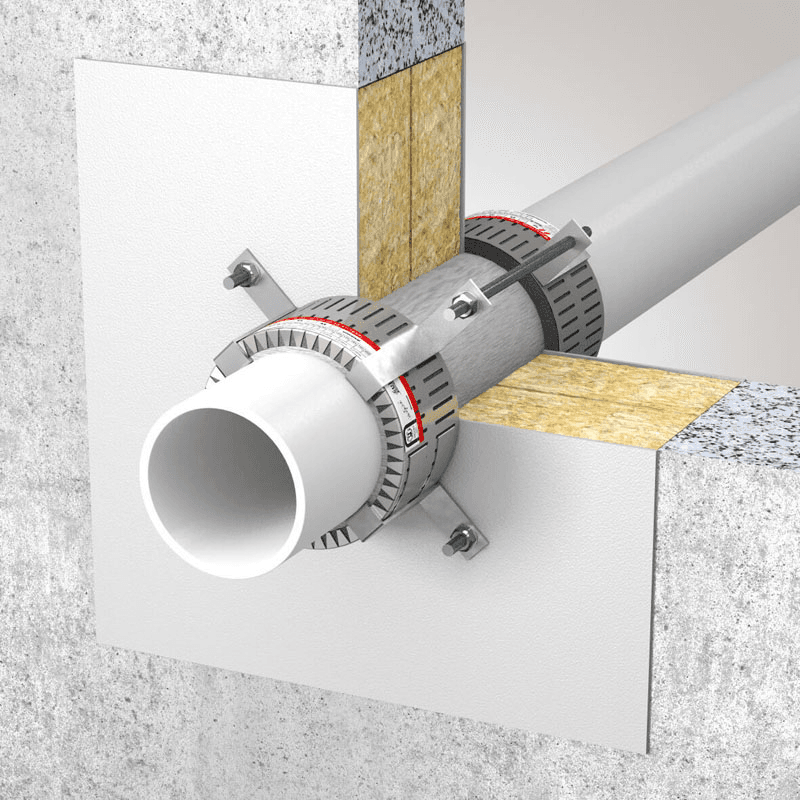
System principle (example)
Visual reference for typical components and placement.
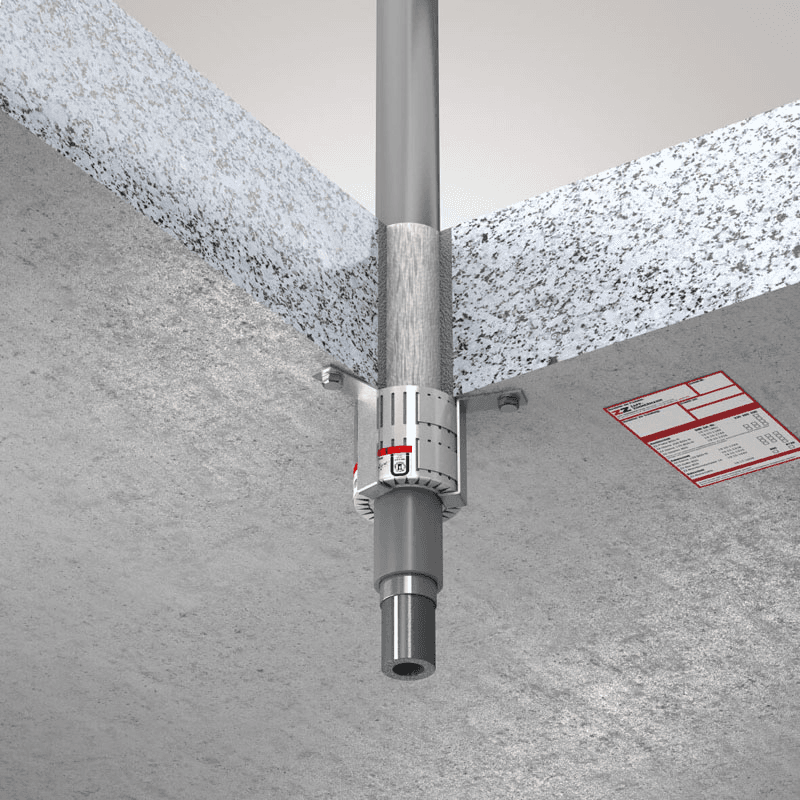
Retrofit situations (example)
Useful when space is limited or for existing penetrations.
Often used for combustible pipes. The material expands in a fire and helps close the opening as the pipe yields.
Flexible for tight spaces or retrofits. Installed around the pipe with defined overlaps and fixing details.
Used to close openings with compatible materials, sometimes combined with additional components depending on the system.
Multiple services in one area require careful planning and compliance with the tested configuration.
To choose the correct system, we clarify these points first:
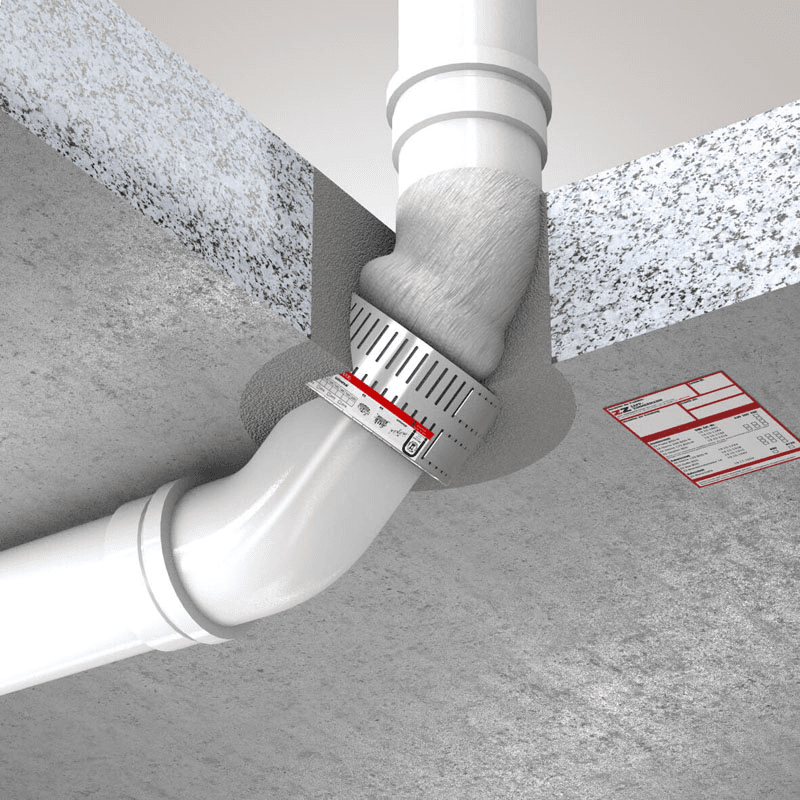
Construction type, insulation length, pipe material and spacing decide which tested system is allowed.
Metal is non-combustible but conducts heat well. Systems must consider heat transfer, gaps and insulation conditions.
Melting/softening behavior is the key. Intumescent components aim to close the opening as the pipe fails under fire exposure.
Insulation type and thickness can change the permitted system and installation details significantly.
Solid concrete/masonry vs drywall assemblies: the build-up defines what is permitted and how it must be installed.
Most issues are not caused by the product itself, but by boundary conditions: wrong opening size, missing clearances, unclear insulation or mixed penetrations without verified evidence.
A practical checklist to keep selection, installation and documentation aligned:
Identify construction: wall/floor, solid/drywall, thickness/build-up
Capture pipe data: material, outer diameter, type (composite etc.)
Confirm insulation: type, thickness, length, continuity
Measure opening: size, edge distances, service density
Confirm required rating: project specs, compartmentation, EI/F class
Select the tested system and define installation details
Plan labeling & photo documentation from day one
In Aachen and surrounding areas, it’s not only about installation quality but also proof. Clear labeling and structured documentation help during acceptance and later operation.
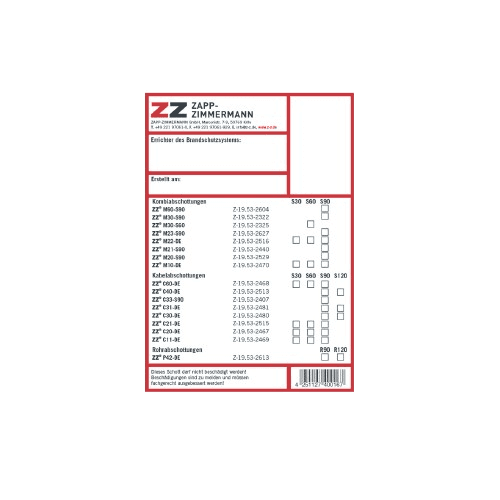
Labels, photos and system documentation make the installation traceable — a strong signal of quality.
Permanent label per penetration seal
Photo documentation before/after installation
Store system documentation/approvals with the project records
Document deviations and clarify — no improvisation
System selection + clean installation + traceable documentation. This keeps the project verifiable — in new builds and existing facilities.
Questions we hear frequently on sites in Aachen and the surrounding area:
A short briefing is enough: wall/floor type, pipe data, insulation and required rating. For Aachen and surrounding areas you’ll receive a clear recommendation including execution and documentation.
Note: system selection and installation must match the tested configuration for the exact site condition.