
Stop smoke & fire spread
Penetrations can act as direct pathways. Tested seals help prevent uncontrolled smoke/fire spread to adjacent compartments.
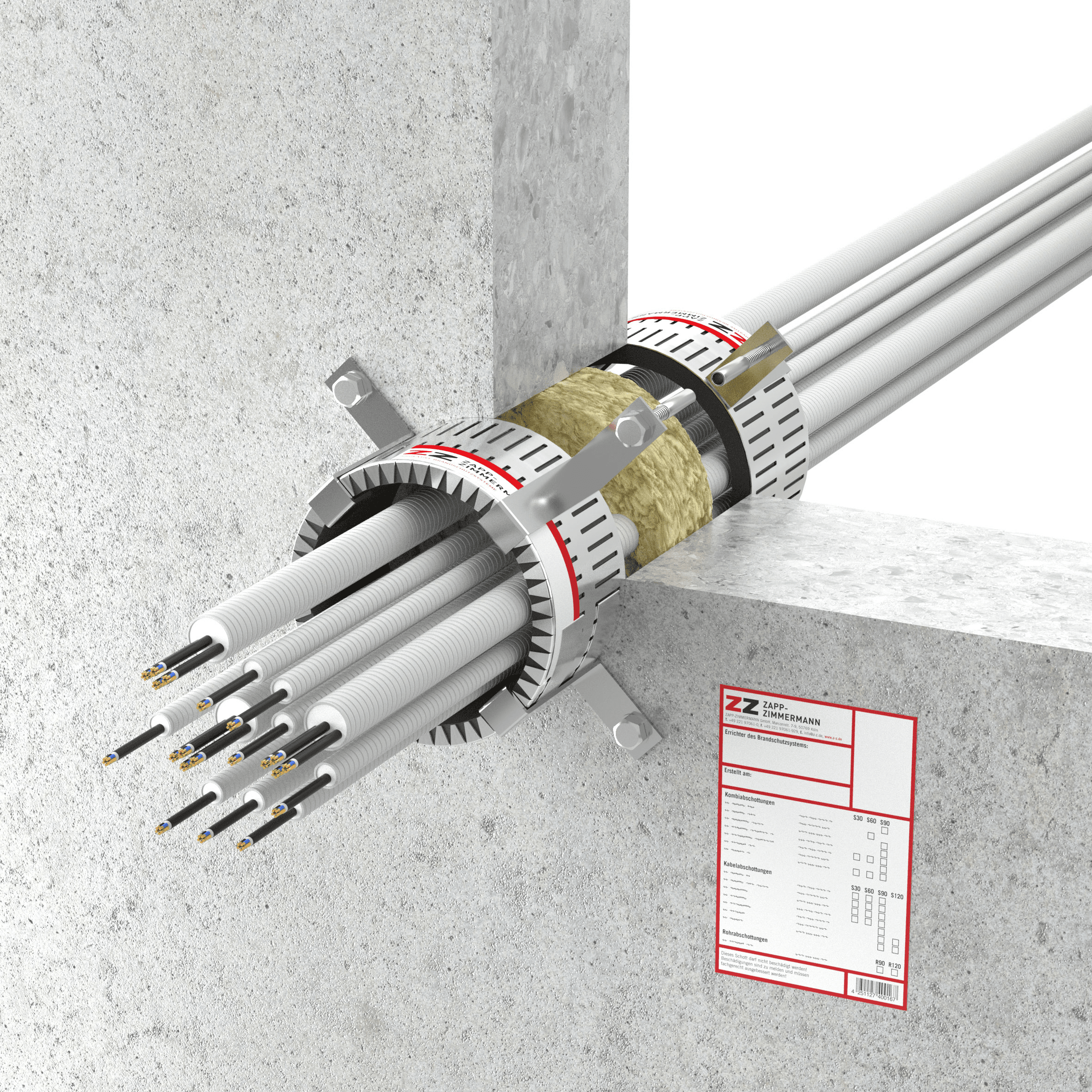
A cable penetration seal is a fire protection measure for cable and service penetrations. It restores the required fire resistance of the wall or floor at the opening – often required in industrial, commercial and public buildings in Aachen.
Depending on cable load (single cables, bundles, trays), substrate type, opening size and required fire rating, different tested systems are used.
Re-entry is common in real operation – that’s why system selection, reserves and accessibility matter (Aachen and nearby areas such as Würselen and Herzogenrath).
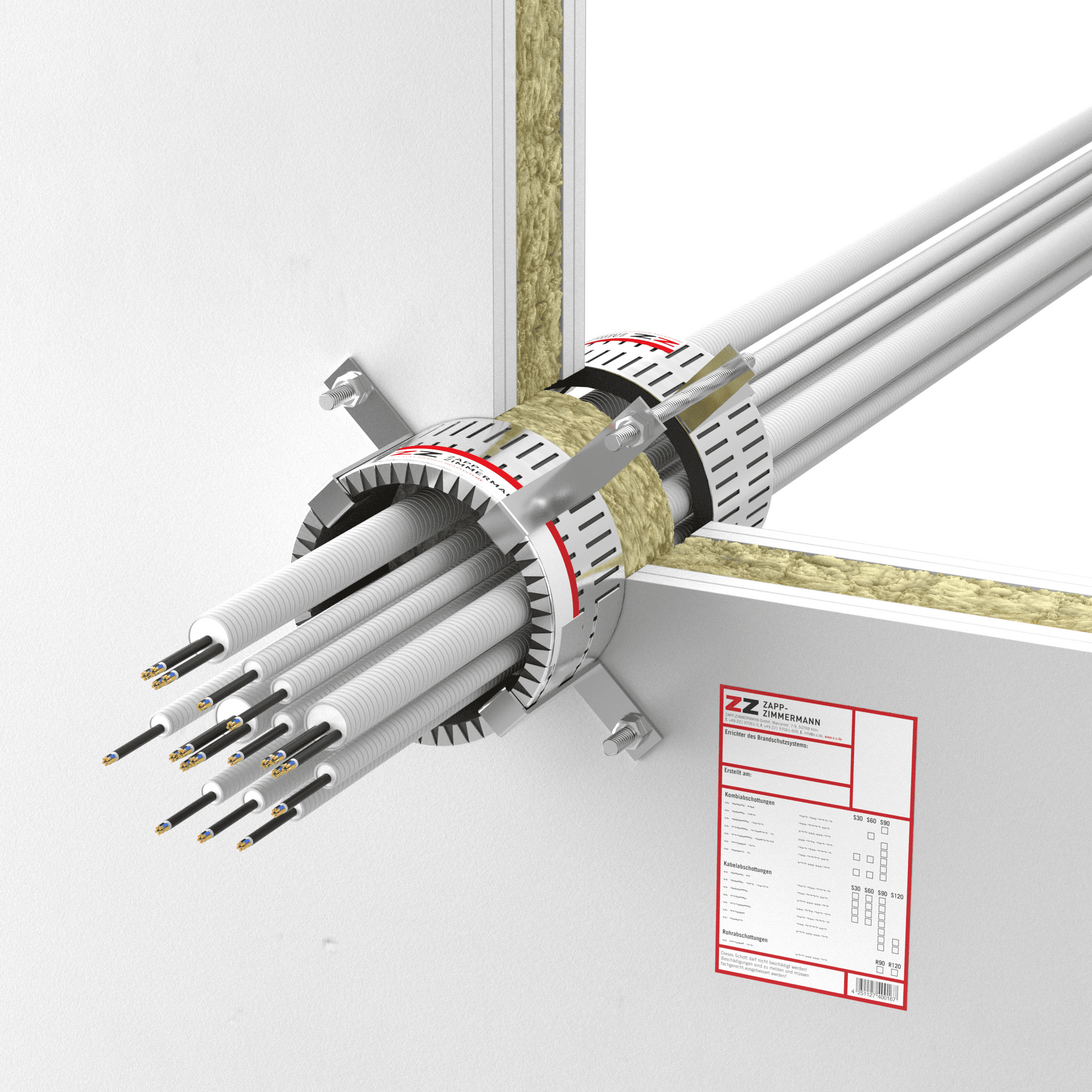
Example image – typical cable/service penetrations in walls/floors (Aachen region).
With cables it’s not only about flames – smoke, heat and tray-related pathways are often the main risk driver. In Aachen and surrounding areas, correct system assignment is key for acceptance and long-term operation.
Penetrations can act as direct pathways. Tested seals help prevent uncontrolled smoke/fire spread to adjacent compartments.
Cables are often added later. System solutions must define how to open/close and re-enter without improvisation.
Labels, system documentation and clear mapping save time during inspections — and later in facility operation.
The right solution depends on cable load, substrate, opening and the required rating. For projects in Aachen and surrounding areas, we implement tested systems tailored to the actual installation conditions.
Common approach for cable bundles and trays. The opening is closed system-based and finished with the approved build-up.
Modules for defined openings — often useful if structured re-entry is expected over time.
Robust for certain openings and constructions, but re-entry must be planned and executed per system rules.
When cables and other services meet. Spacing, edge conditions and tested configurations become critical.
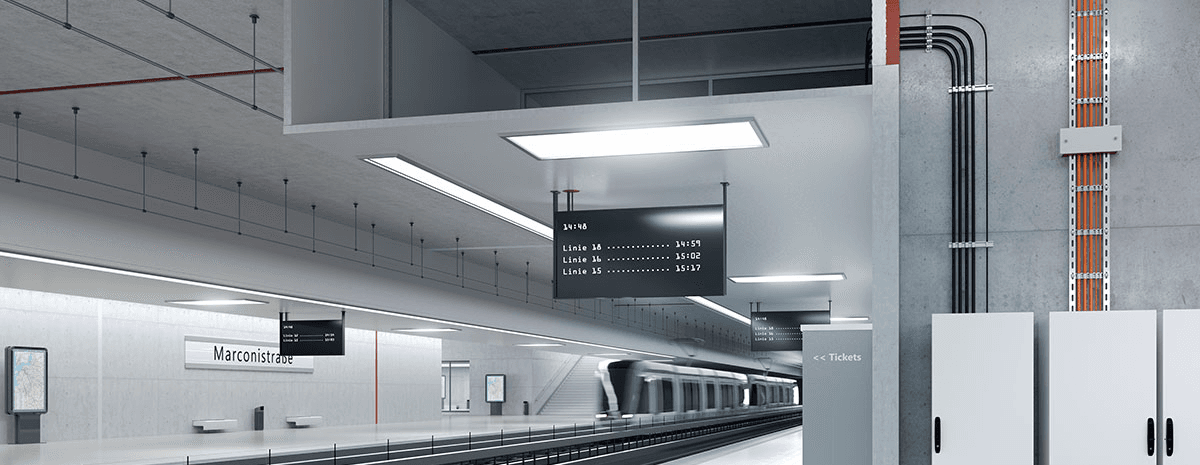
System principle (example)
Visual reference: typical components & placement.
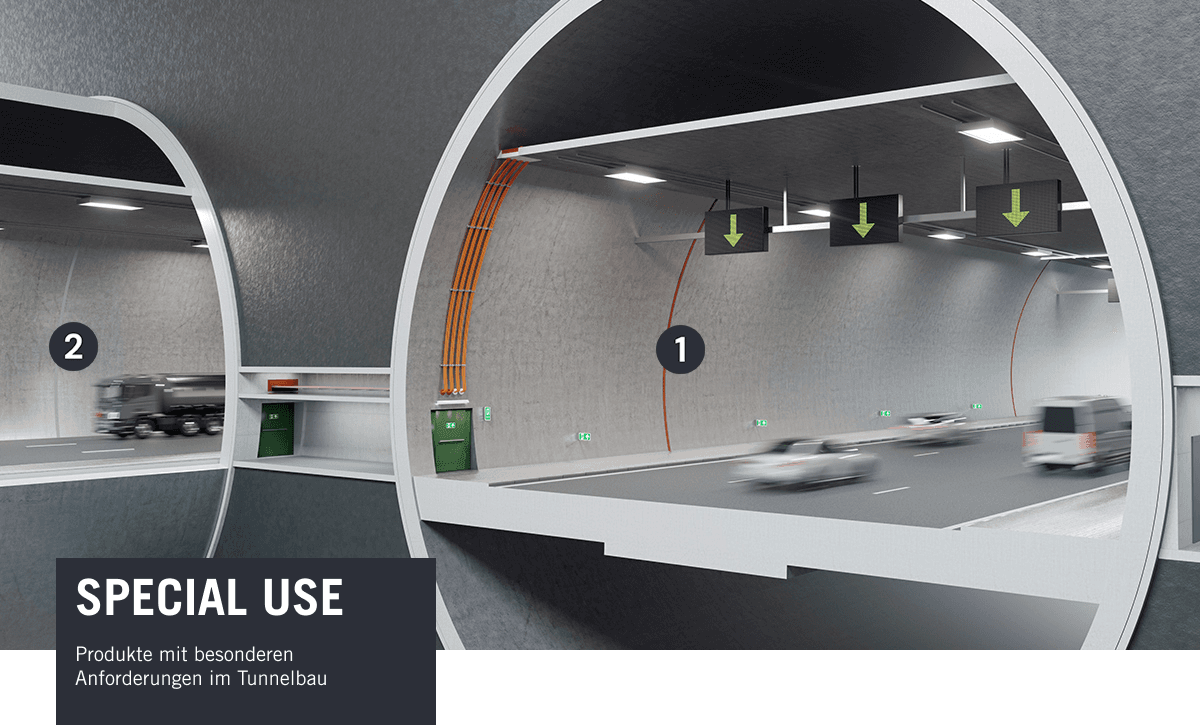
Trays / re-entry (example)
Important for existing sites and frequent changes.
Most issues aren’t about the material — they come from missing system allocation and edge conditions.
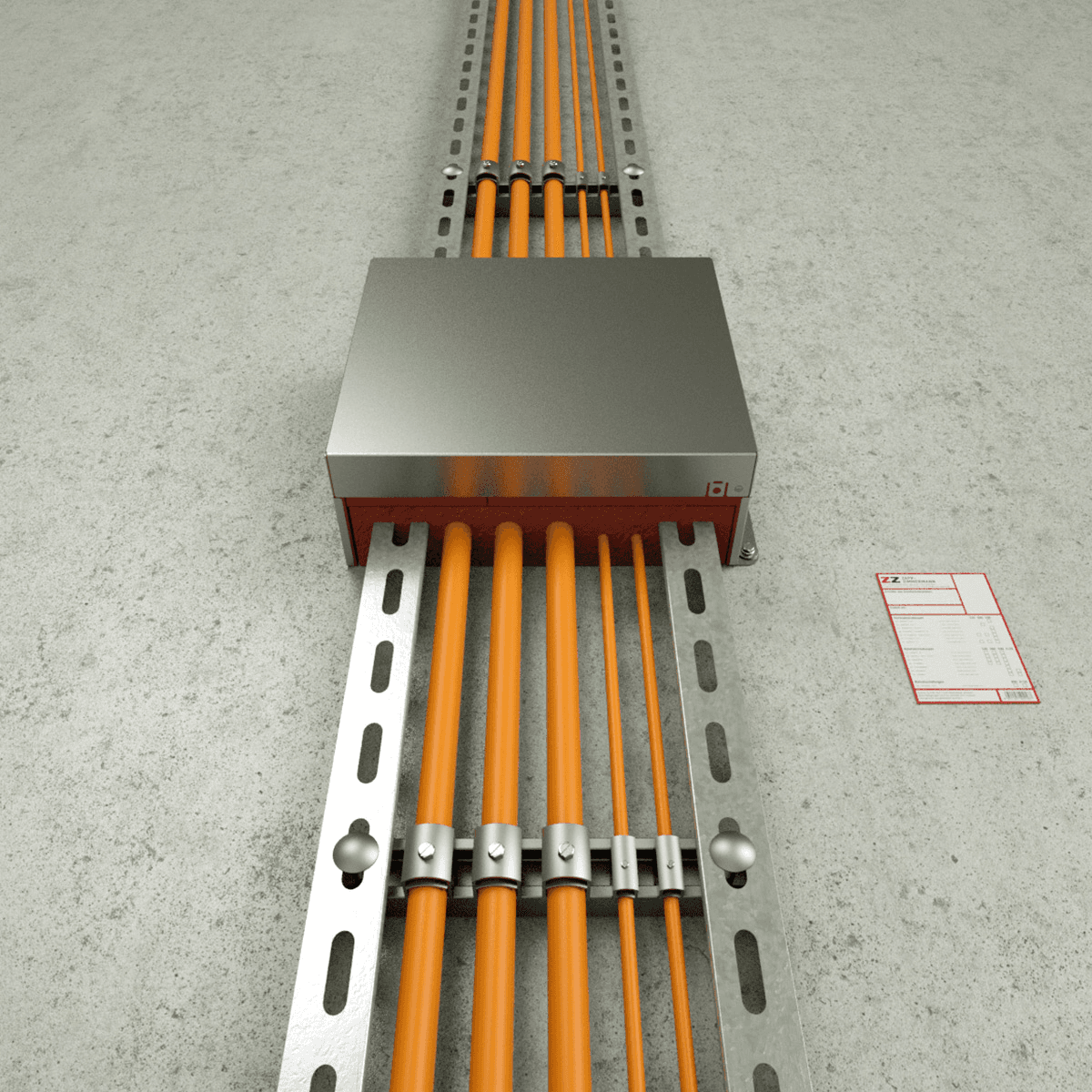
If re-entry isn’t considered, people improvise later. We plan reserve and system rules from the start.
Solid vs drywall matters. Build-up and substructure define what’s permitted.
Edge distances, density and route layout must match the tested configuration — otherwise inspections get critical.
For cable routes, future changes are normal. If re-entry isn’t planned, later work often becomes risky and expensive.
To avoid surprises during installation and acceptance in Aachen and surrounding areas, we clarify these points first:
Identify construction: wall/floor, solid/drywall, thickness/build-up
Capture loading: single/bundles/trays, reserve for re-entry
Measure opening: size, edge distances, tray position
Confirm required rating: project specs, compartmentation, EI/F class
Select the tested system and define installation details
Consider re-entry & access (shafts/service areas)
Plan labeling & photo documentation from day one
In Aachen and surrounding areas, proof matters: labeling, photos and system documentation make the execution traceable – especially with re-entry and later inspections.
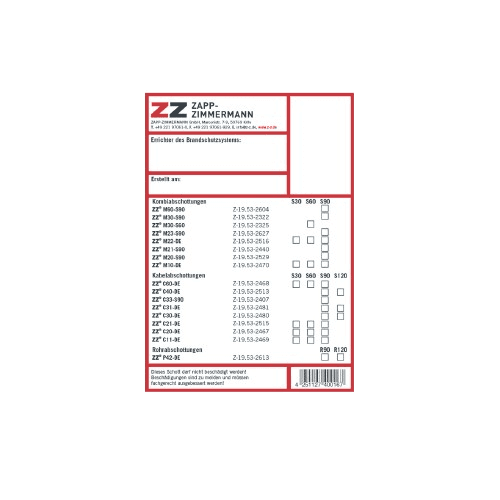
Labels, photos and system documentation keep the execution traceable — especially with later re-entry and inspections.
Permanent label per penetration seal
Photo documentation before/after (if required)
Store approvals and system documentation with the project records
Document re-entry and keep it system-compliant
System selection + clean installation + traceable documentation — for new builds and existing sites.
4–5 questions that almost always come up on sites in Aachen and surrounding areas:
A short briefing is enough: wall/floor type, tray/cable load, opening and required rating. For Aachen and surrounding areas you’ll receive a clear recommendation including execution and documentation.
Note: system selection and installation must match the tested configuration for the exact site condition.